Brushing cats' teeth? Is it really necessary?
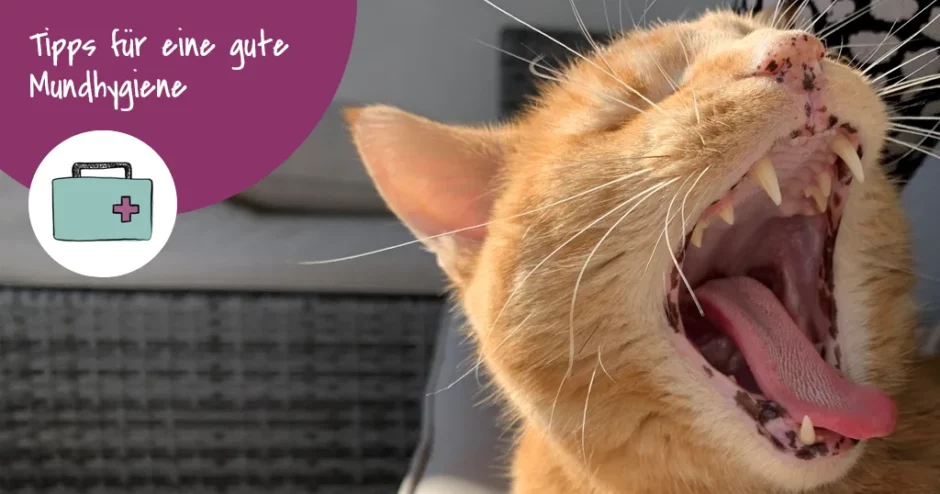
Your cat has bad breath and your vet tells you that your cat has tartar and may even be suffering from gingivitis? We'll give you a few tips on oral hygiene and how you can prevent tartar and inflammation.
We are often asked for tips on oral hygiene. Our furry friends are also affected by tartar and sometimes inflamed gums. As our cats have already reached a certain age, it is out of the question for us to brush their teeth. If you want to do this, it's worth starting at a young age and getting them used to it as kittens.
However, as our cats would no longer put up with this, we offer them other ways to maintain their oral hygiene ?
From the rumor mill!
Dry food as toothpaste?
First we have to dispel this rumor.
Unfortunately, there is a persistent rumor that dry food contributes to dental hygiene. We often hear the phrase: «We feed our cats dry food all day to brush their teeth». Phu. Difficult. Apart from all the other reasons why you shouldn't give your cats dry food as a regular meal, brushing their teeth is not one of them.
Feeding a cat dry food for better oral hygiene is like giving your children (or even yourself) cookies to brush their teeth. Doesn't sound logical somehow, does it?
But what alternatives are there?
What do cats eat in the wild?
«Back to the origin» - if we think about how our cats would eat in the wild if we didn't take care of them, we would quickly come to the conclusion that they would probably hunt mice (including other small rodents), birds and insects. Owners of outdoor cats can certainly confirm this. ? Incidentally, this is also why outdoor cats usually have fewer problems with tartar (Attention: but excludes e.g. the Dental disease FORL not off).
This means that by chewing and gnawing intensively on bones and meat, cats' teeth are rubbed and cleaned at the same time. So you don't have to brush your cats' teeth, but can give them something to chew on from time to time.
B.A.R.F. or fresh meat
Suitable chews include raw chicken necks. These can be bought frozen in pet shops. Feed the chicken necks raw. Bones should never be fed cooked, as they splinter and the small pieces can get stuck in your cat's throat.
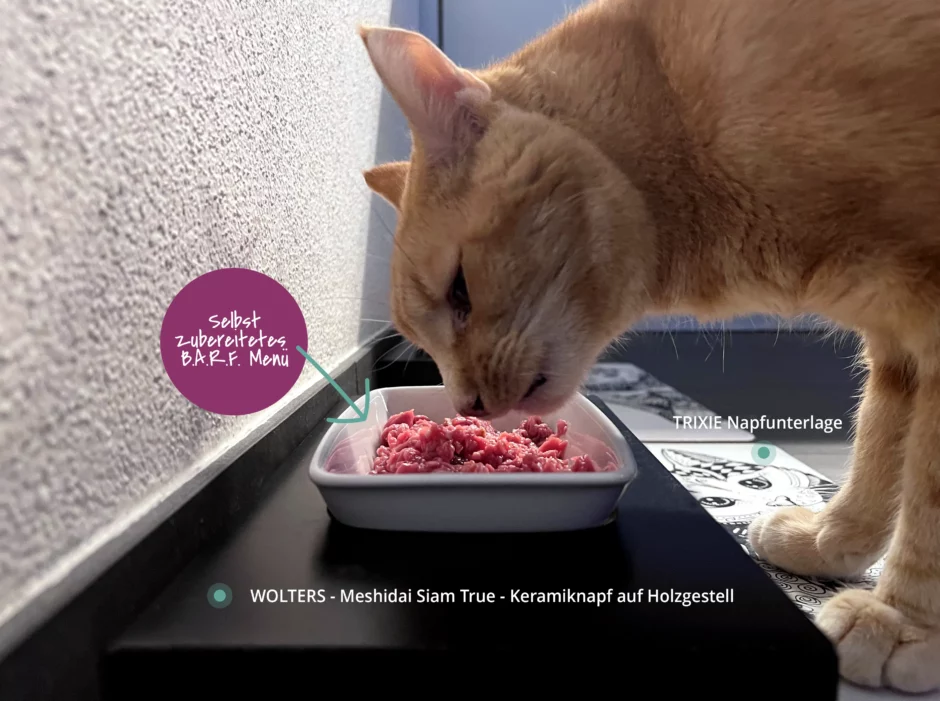
You can also look into the subject of B.A.R.F. («Bones and raw food») and, for example, feed home-prepared meat in addition to high-quality wet food. If you bark regularly, it's worth taking a course to ensure that your cats don't suddenly develop deficiency symptoms. In other words: Barfeeding is not simply putting meat on the table. For cats in particular, it is important that they get all the supplements they need.
However, if you only want to give your cats raw meat occasionally, it is not necessary to supplement it.
The products in the photo
TRIXIE - Bowl mat with mandala cat
WOLTERS - Meshidai Siam - Ceramic bowl on MDF plate frame - 30cm x 15cm / H 5cm - 250ml - black
Unfortunately, you can't buy Nemo in our online store ?
Day-old chicks - not for the faint-hearted.
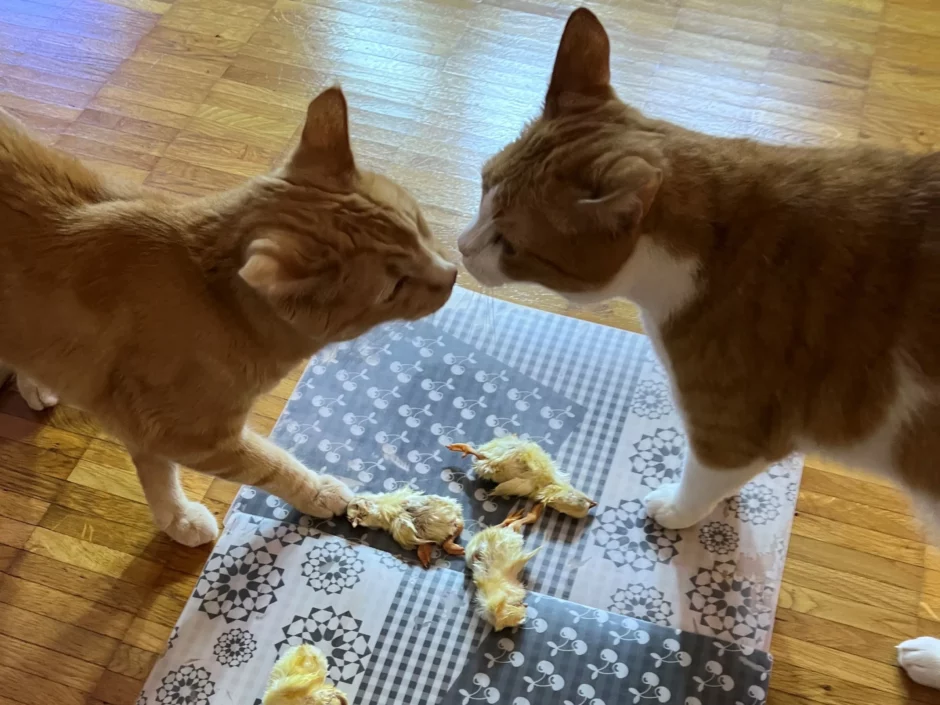
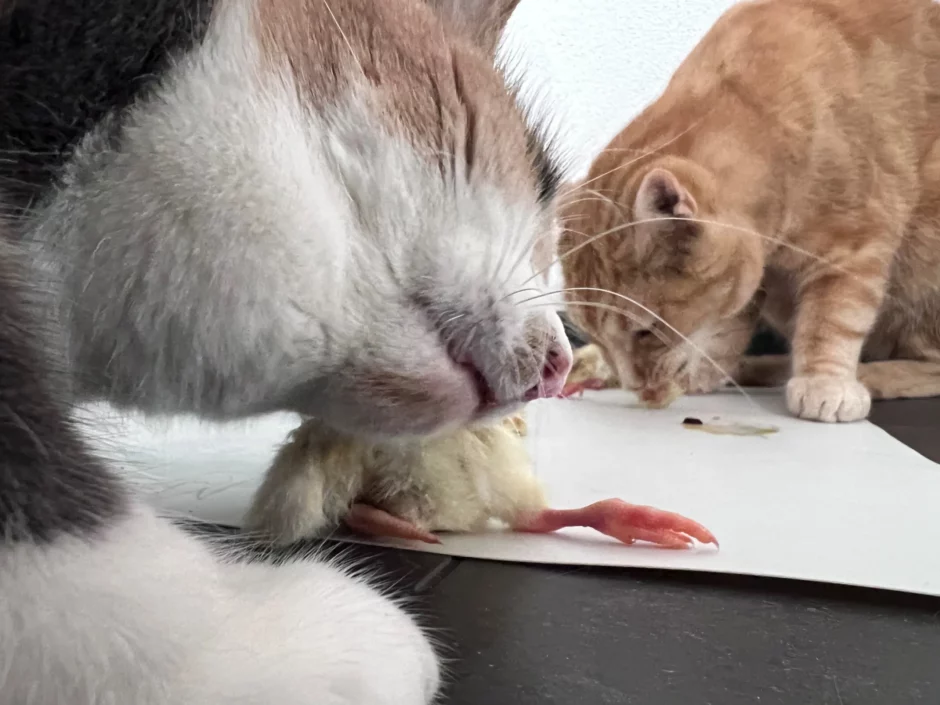
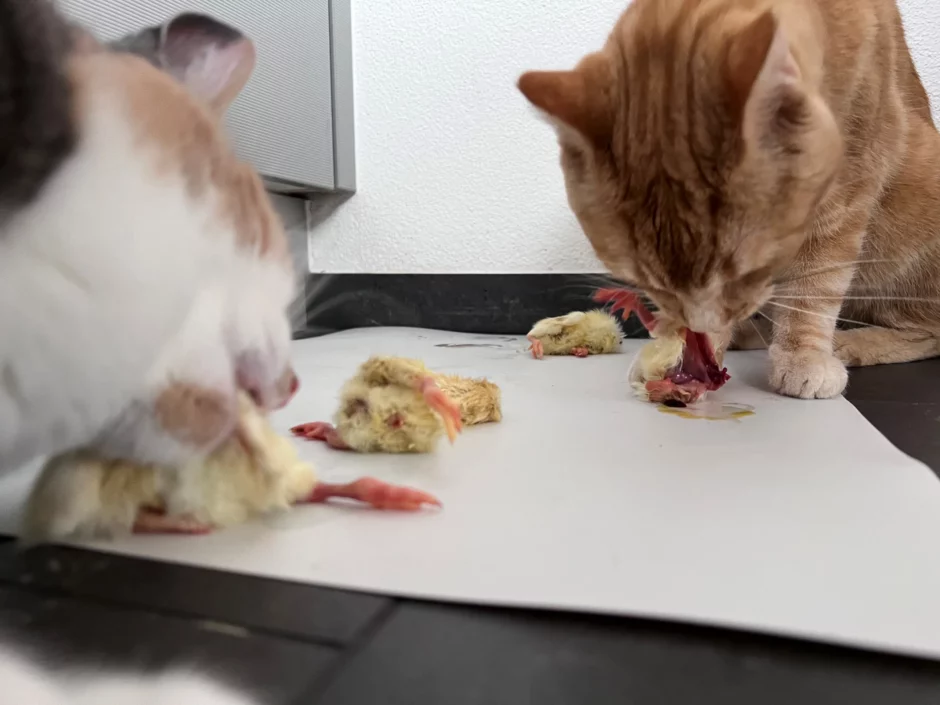
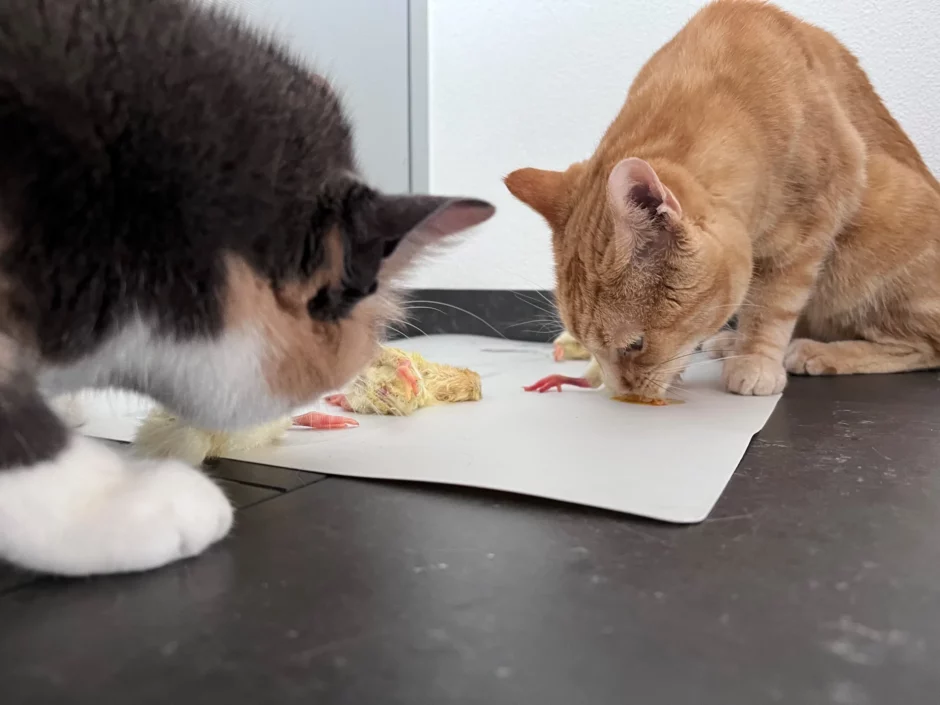
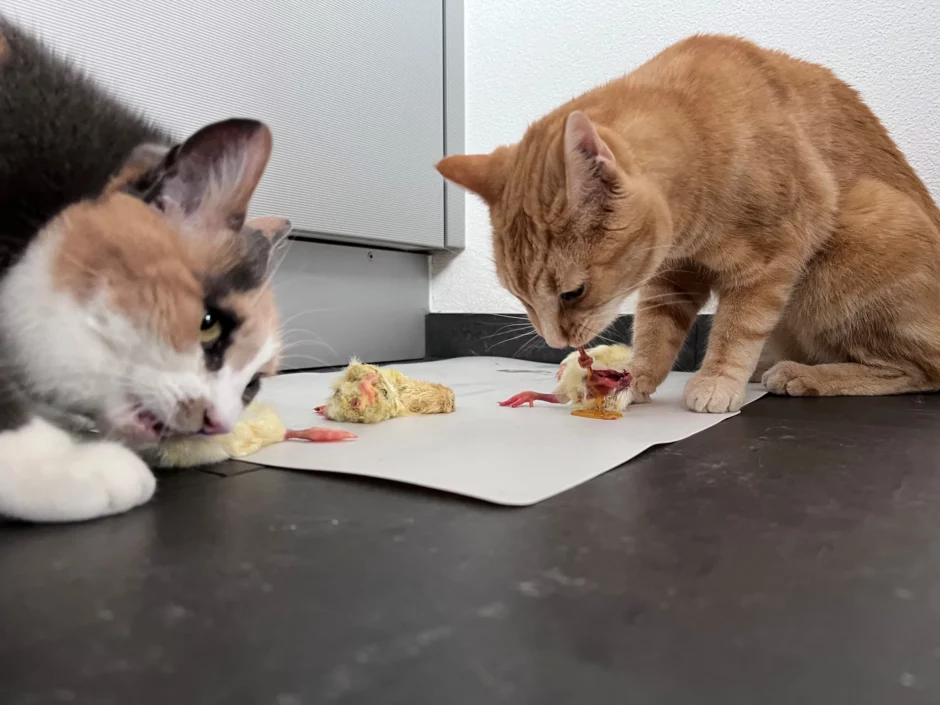
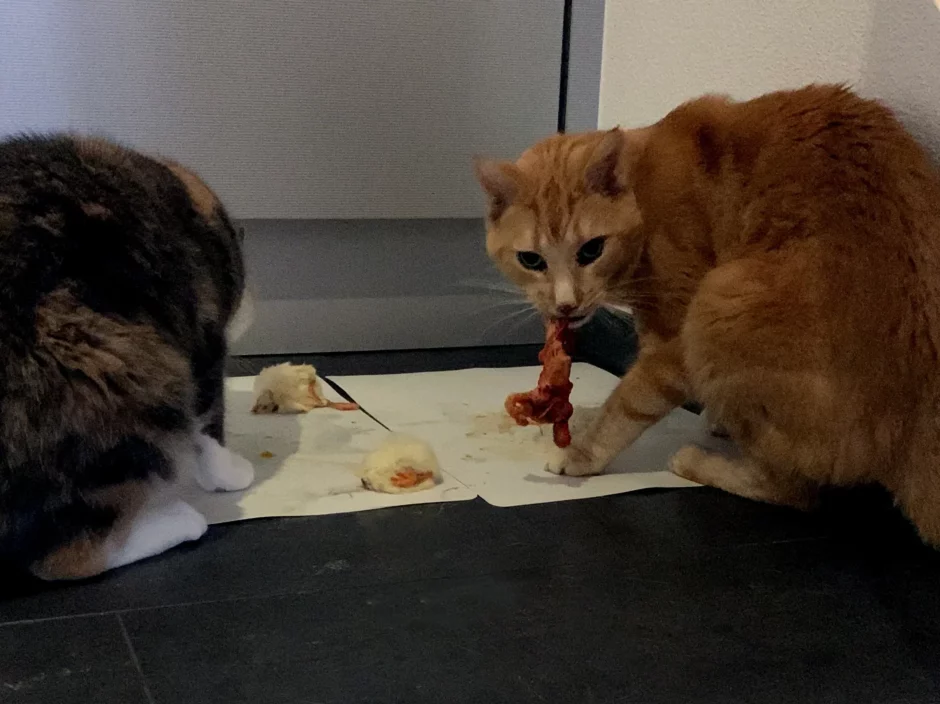
What we also do as a preventative measure, and also because it encourages the cats' natural instinct, is to feed them day-old chicks. Definitely not for the faint-hearted. I also had to get used to it at first.
I would like to emphasize that we only feed chicks from a hatchery, which are a «waste product» of human meat consumption. These are therefore male chicks. Our furry friends spend several minutes chewing and eating the chicks. Pixie's play instinct is also partly stimulated and she plays with the chicks for some time (the chicks are no longer alive, of course, but are already delivered dead).
Please note, the following pictures may not be everyone's cup of tea. However, we have carnivores (meat eaters) at home... and this is what it looks like ?
Regular check
But none of this replaces the annual check-up at your vet! It is important that the specialists look at your pet's teeth once a year. It's also worth having a digital dental x-ray done in between. Because every second cat over the age of 5 suffers from dental disease FORL (Feline odontoclastic resorptive lesions), which unfortunately cannot be cured. FORL is extremely painful and a very serious dental disease in cats. FORL begins in the invisible area of the tooth root and the tooth neck. Therefore, in most cases, FORL can only be diagnosed with a digital dental x-ray.
Dental hygiene helps with tartar and inflamed gums. Dental hygiene is carried out under anesthetic. Afterwards, your cat can «velvet paw» through the day without any pain ?