FORL - A degenerative dental disease
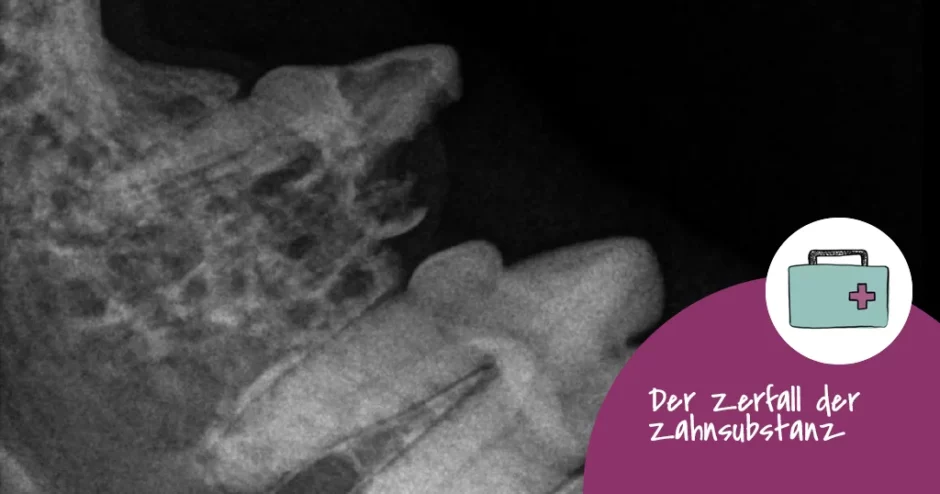
FORL stands for «Feline Odontoclastic Resorptive Lesions» and is a degenerative dental disease in cats. It is one of the most common and most painful diseases in cats.
What is FORL?
FORL is a dental disease in cats in which the tooth and its roots dissolve. Around 25-30 % of domestic cats are affected by FORL, with every second cat suffering from it from the age of 5 years onwards (regardless of race or origin). The specific cause of the disease cannot yet be 100% confirmed. However, the latest studies indicate that the disease may be caused by a disturbance of the calcium balance, which leads to a calcium deficiency. This activates cells that break down the dentine (tooth bone), which ultimately leads to the destruction of the entire tooth. As the nerves remain intact, affected cats have Great pain. It is assumed that a reduced calcium intake in the feed can also contribute to the disease.
FORL can cause pain in the areas of the ears, eyes, teeth, oral cavity and throat.
There are 3 forms of feline odontoclastic resorptive lesions (FORL):
FORL type 1
Type 1 usually occurs in conjunction with inflammation of the oral cavity mucosa (stomatitis) and the periodontium (periodontitis) and is often accompanied by dental plaque and tartar. In addition to the changes to the teeth, decay processes also take place in the tooth compartments. The crown of the tooth is usually not affected.
Visual changeThe gums are very red, swollen and growths (hyperplasia) may also occur. Unfortunately, most of the actual lesions on the tooth neck are not visible. The diagnosis can therefore only be made using digital dental x-rays.
FORL type 2
Type 2 lesions initially develop without inflammatory involvement. However, periodontitis can develop in the further course of the disease.
Visual changesInitially, the teeth appear healthy and localized inflammation of the gums may be visible. However, the processes only become visible with further hollowing of the tooth and possible eruptions of the tooth crown. Only an X-ray examination can reveal the bone loss in the tooth and tooth root.
FORL type 3
Simultaneous occurrence of Type 1 lesions and Type 2 lesions on a tooth.
FORL on the X-ray image
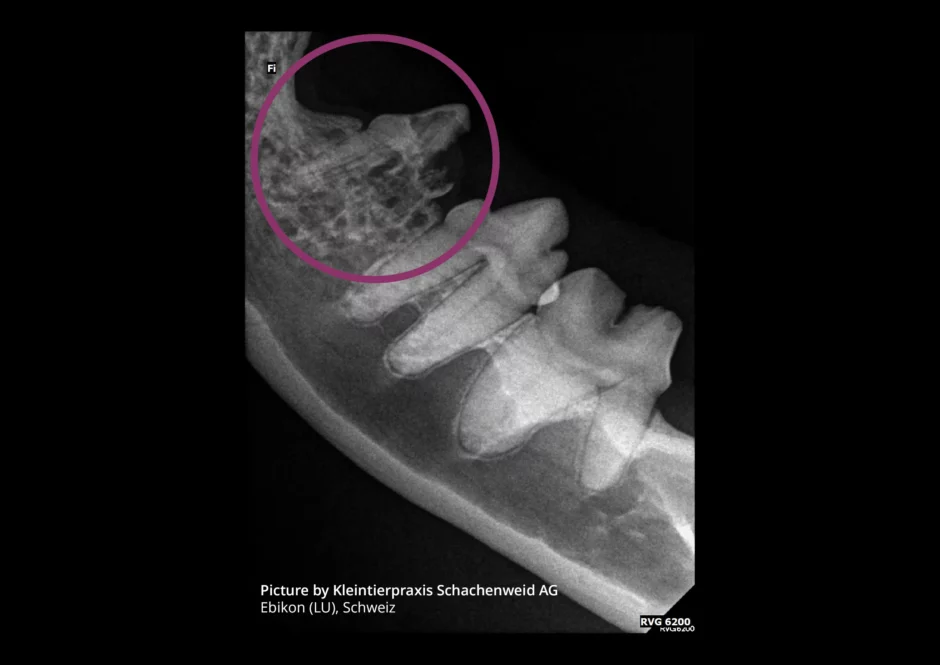
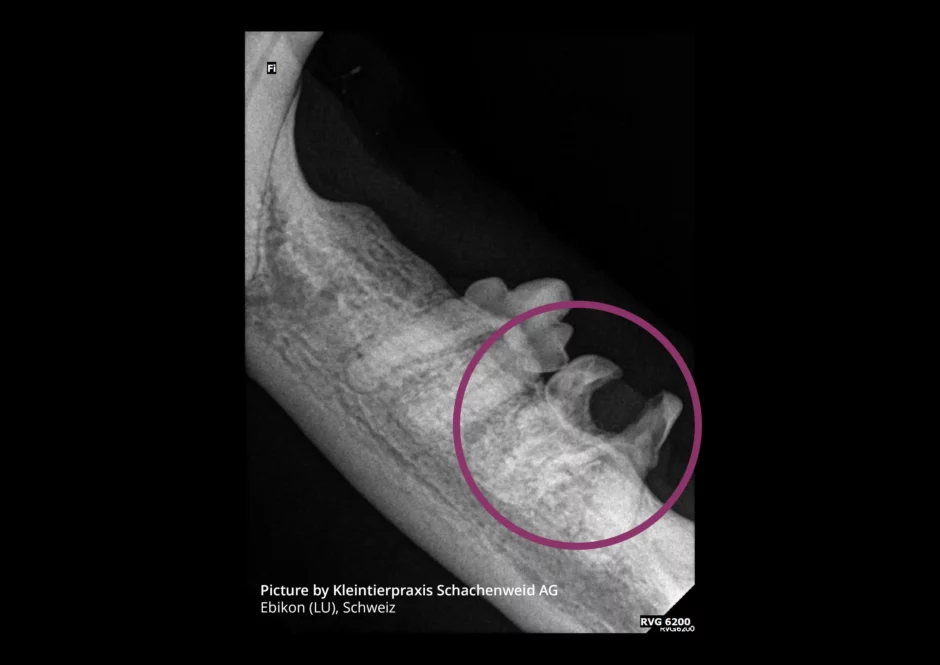
The first x-ray (left) shows a severe case of FORL with complete loss of the root and the crown area. The second image (right) clearly shows the loss of the tooth root and the changes in the crown area.
Such teeth are irreparable and it makes no sense to remove the tartar, which is why an extraction (tooth removal) must be carried out in such cases. Although tooth extraction leads to the loss of the affected teeth, it eliminates the painful cause. The extraction is accompanied by the administration of painkillers and, in most cases, antibiotics.
With FORL type 1, care must be taken to ensure that all parts of the tooth are completely removed and that no remnants of the tooth roots remain in the tooth socket. Residues can perpetuate the inflammation and continue to cause severe pain.
And don't worry! Your cat can continue to live very well with fewer - or no - teeth. Cats learn quickly. Our Nemo, who is affected by FORL, quickly learned how to eat his beloved day-old chicks despite having fewer teeth (more on this topic in the article «Brushing cats» teeth? Is it really necessary?") - unlike before - but he has found a solution that works for him.
Symptoms of suspected FORL
Cats suffer in silence.
Anyone who has ever had a root canal knows very well how painful it is. Unfortunately, our cats are incredibly good at hiding pain. This is why diseases are sometimes discovered far too late. Nevertheless, there are a few signs that can indicate FORL or at least a dental problem. As your furry friends are very «resistant», it is up to you to keep a close eye on them and read any signs early on.
- Changed behavior during food intake. For example, refusal of the usual food or even cries of pain when eating
- Increased salivation
- Grinding or chattering teeth
- Shaking your head or tilting your head
- Sensitivity when touching the head / e.g. frightful pulling back of the head
- Shaggy coat / your cat somehow doesn't look as well-groomed as usual
- Strong bad breath
- Restless sneaking around or hissing at the bowl
- Food falls out when chewing
If you suspect that your cat is suffering from toothache, you should see a vet immediately. Find out in advance whether your vet has a digital dental x-ray machine. During the examination, your vet will probe the oral cavity if there is any suspicion. They will use a pointed probe to feel the teeth and gums. One indication of FORL may be «chattering» in the cat - the typical chattering of teeth that can be attributed to pain.
Under a brief anesthetic, appropriate x-rays can be taken to record a complete tooth status. These images are the only way to see whether the dentine (tooth bone) has already dissolved under the gums.
Incidentally, if you take your cat to your vet for dental hygiene anyway, it makes sense to have x-rays taken of the jaw. This way, decomposition of the tooth roots can be detected as early as possible.
Treat FORL?
The decay of the tooth substance can neither be halted nor reversed by FORL therapy. It is therefore necessary to completely remove all affected teeth. This operation is performed by the vet under general anesthesia and with X-ray control to ensure that no tooth root remnants remain in the jaw, as these could cause inflammation. After the extraction, the gaps between the teeth are stitched up to prevent food debris from getting stuck. Your cat will be able to eat again the day after the operation.
The stitches dissolve by themselves so that no stitches need to be removed. To combat the inflammation caused by FORL, an antibiotic is administered, which is sometimes given before the operation to reduce the risk of infection. Your vet will carefully consider the dosage and only prescribe as much antibiotic as is absolutely necessary. The cat will also be given a painkiller throughout the treatment.
Unfortunately, there is currently no medication available to treat this widespread dental disease.
Our thanks go to you!
The x-rays were sent to us by our veterinary practice at the Small animal practice Schachenweid AG in Ebikon (LU), which has a digital dental X-ray machine.
Thank you very much for helping us to spread the information about «FORL» and make people aware of it.