The biggest myths about cats
In the year 2026, you might think that all the myths about cats have been dispelled. Unfortunately, however, we keep hearing from people that they have been told various things about cats, their attitude, species and health. These topics often come to me because people are unsure whether they are really true.
Here is a small excerpt from the most well-known myths:
Cats no longer catch mice after neutering
A cat must have been pregnant at least once in its life
Purring always means that the cat is happy
Cats are loners
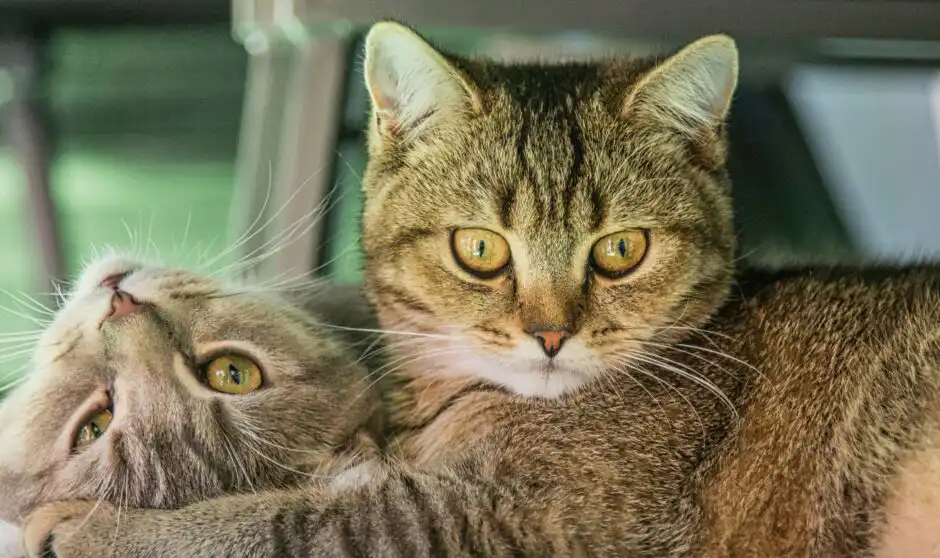
Wrong. They are individualhunter, but at all no case Singlegoers! One of the toughest myths that is still floating around and finally needs to be officially refuted. Cats, like almost every living creature, need their conspecifics. They learn from each other. They communicate «kittenishly» with each other.
Unfortunately, we keep hearing that «breeders» are also selling individual cats. It is a mystery to us why this is done. We expect «breeders» in particular to have more knowledge about how cats work. Sure - just like with us humans, there are also exceptions with cats. But describing a kitten as a «loner» or «likes to be alone» at 14 weeks old is, in our view, really just a way of getting rid of a cat and being able to sell it. Or can we already know what a kitten's character will be like as an adult?
We always recommend that you try to socialize them with conspecifics at least once. It is worth it. For the good of the animal. And it's also wonderful to see how they look after each other, play together, sometimes tussle, and so on. Just as it should be.
Cats need special food after neutering
That's not true. Neutering does change the cat's metabolism and can also change its behavior - but it does not automatically turn the cat into a «special case» that is only allowed to eat special food. It is much more important that the cat does not eat too much after neutering and does not exercise too little, because the energy requirement is often reduced.
This means that a good, balanced diet is still important. But this does not automatically have to be a special «neutering food». Many cats do just as well on high-quality normal food as long as the portions and activity levels are right.
You will find a large selection of high-quality wet food, which is suitable for healthy cats of all ages.
Dry food cleans cats' teeth
One of the topics that makes us really tired, hahaha. It would be like giving your children cookies to brush their teeth. Have you ever thought about it? ? If you want to know what you can do for better oral hygiene, we've already written a small contribution written.
Cats no longer catch mice after neutering
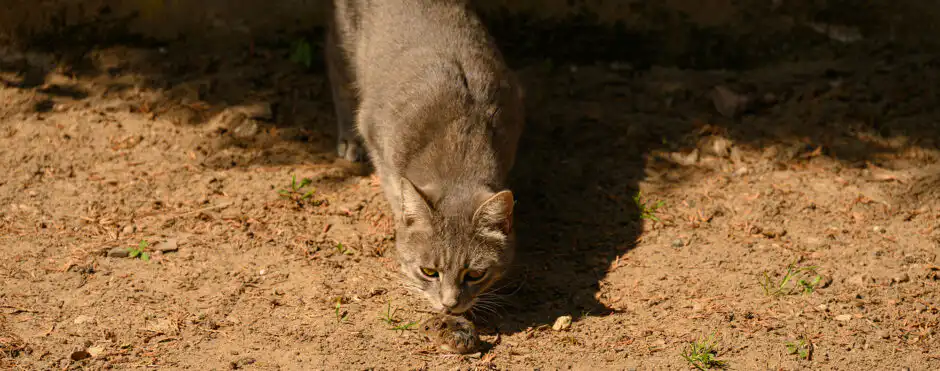
I think that this rumor is particularly prevalent in the farming industry and is misused as a reason for «not neutering». We have not yet seen any outdoor cats that have not hunted after being neutered.
Castration influences the Reproductive instinct, not the Hunting instinct. Hunting is deeply rooted in a cat's behavior and has nothing to do with sex hormones. Even a neutered, well-fed cat remains a highly specialized hunter.
So don't be afraid! Even when cats are neutered (which they really should be), they still catch mice ?
A cat must have been pregnant at least once in its life
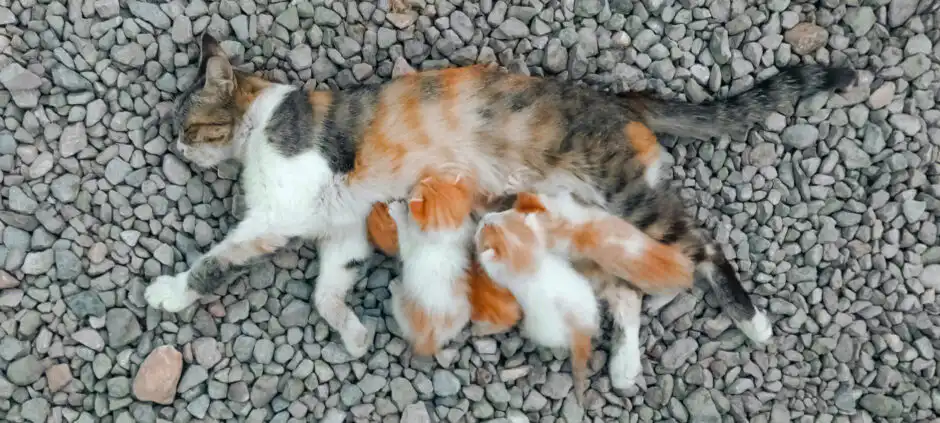
What's it like with humans? Oops, if that's true, then I'll have to hurry! ?
The myth that every cat should have been pregnant once in its life is false and lacks any scientific basis. Pregnancy is No health advantage for cats, but a Physical stress with real risks.
Cats do not need pregnancy to become «balanced», «mature» or «happier». This argument comes from human ideas and is wrongly transferred to animals. What counts for cats is not life experience, but well-being, health and species-appropriate husbandry.
On the contrary: every pregnancy and birth brings with it Risks such as complications, infections or problems during birth. Then there is the responsibility for the offspring - in a world where far too many cats are already unable to find a home.
Kittens need kitten food
Have you ever seen special mice for kittens in the wild? Exactly ?
The myth that kittens necessarily need special kitten food hardly stands up to closer scrutiny. In the first few weeks of its life, a kitten is suckled by its mother and receives everything it needs for growth, immune system and development through its mother's milk. It couldn't be better, more natural or more tailored to the kitten's needs.
As soon as kittens eat solid food, they are not guided by age categories in nature, but by what is available: prey. And these do not consist of «kitten recipes», but of meat, offal, fat, bones and moisture. This is precisely the basis of a species-appropriate cat diet.
A healthy kitten can generally eat high-quality, species-appropriate cat food after weaning, as long as it is rich in energy and nutrients. The decisive factors are quality, composition and digestibility. Not the label on the packaging.
Many so-called kitten foods are distinguished primarily by their marketing: smaller kibble, eye-catching packaging, big promises. In terms of content, they are often highly processed and not necessarily better than good food for adult cats. Growth does not require special products, but suitable nutrients.
And the key question is simple:
What does a young cat eat in the wild as soon as it is no longer suckling?
Quite normal prey.
High quality kitten food, as we offer it in the store, you are welcome to feed it. You can also simply feed your young Büsis the high-quality wet food for adult cats ?
Cats need dry food
No. Dry food was primarily developed as a relief for humans. It hardly smells, can easily be left in the bowl all day and does not dry out (even more). After all, there is no dry food lying around in the wild... at least I've never come across any.
Cats cannot be «educated»
We don't really like the word «education». But we know what it means.
Cats work differently to dogs. They do not follow orders and do not act to please. Training cats therefore does not mean obedience, but creating a framework: Shaping the environment, routines and incentives in such a way that the desired behavior emerges. Cats learn through experience and motivation. Not through commands.
«Dogs can be led, cats can be persuaded.»
Conclusion
Cat training is not an instrument of control, but relationship work. Anyone who tries to train a cat like a dog is not failing because of the cat - but because of the wrong approach.
Indoor cats are unhappy
Keeping your cat indoors does not automatically mean a lack of quality of life. A cat is not unhappy just because it can't go outside. The decisive factor is, how and with whom she lives, not where. With enough space, at least one cat friend, opportunities to retreat, activity, mental exercise and regular attention, indoor cats can lead a very stable and happy life.
In fact, indoor cats are often even safer than outdoor cats: no traffic, no territorial fights, no parasites and a lower risk of injury. Cats don't become unhappy because of four walls, but because of boredom, lack of structure and lack of activity.
If you are prepared to take responsibility, design a cat-friendly environment and invest time, you can also offer your cat a fulfilling life in the home. Keeping your cat in an apartment is not a problem - careless keeping is. If you need help with furnishing and don't know exactly how to make your home species-appropriate, you are welcome to contact us.
Purring always means that the cat is happy
It would be nice. Cats also purr when they are scared, stressed or in pain. That's why your furry friend may well purr at the vet, even though she may not be as comfortable as she seems at first.
Although with our Pixie I already have the feeling that she feels comfortable with our vet. But - he's a really nice guy too!
Milk is healthy for cats
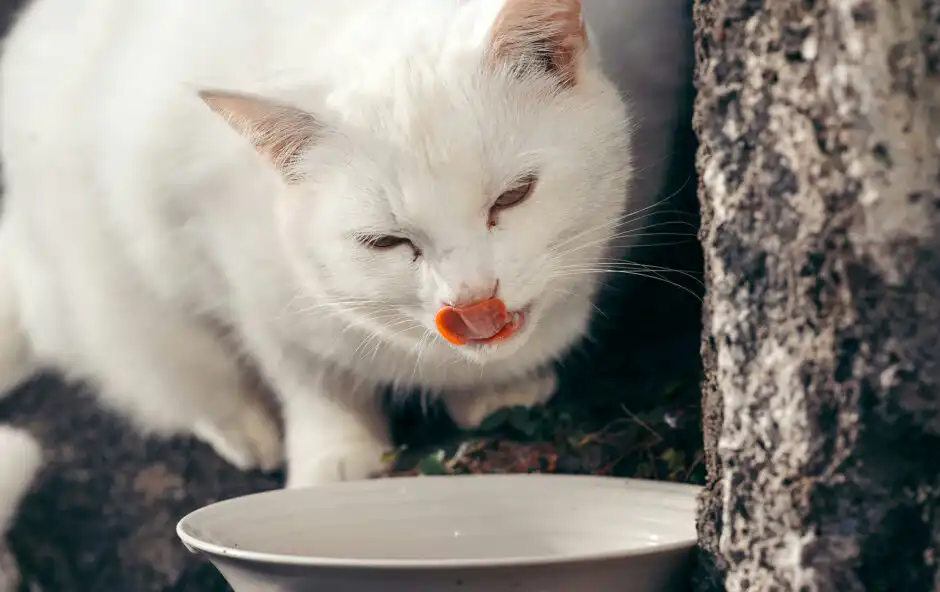
No. Most cats are lactose intolerant because they lack the enzyme lactase or only have a very small amount of it. Lactase is necessary to digest milk sugar (lactose). If cats drink milk that contains lactose, this can lead to Diarrhea, flatulence, abdominal pain and Discomfort lead.
Cats are not cows and they are not made to drink milk once they are weaned. In nature, there is no more milk after weaning, and that is exactly how it is best for our «pets».
Always offer your cat fresh water. So that she can quench her thirst even when she's had a bit more treats.
By the way!
If you only feed your cat wet food, it may even be that she rarely or never drinks. If you think she would like to drink (e.g. after a play session, when she has had a few more treats), but she doesn't like to drink from the water bowl, then offer her e.g. a rippling drinking fountain to.
Get in touch with us!
Do you know any more old wives' tales like this? Then please let us know so that we can expand this post ?


